Gone Mainstream: The Complicated Grief of Watching Your Niche Get Famous
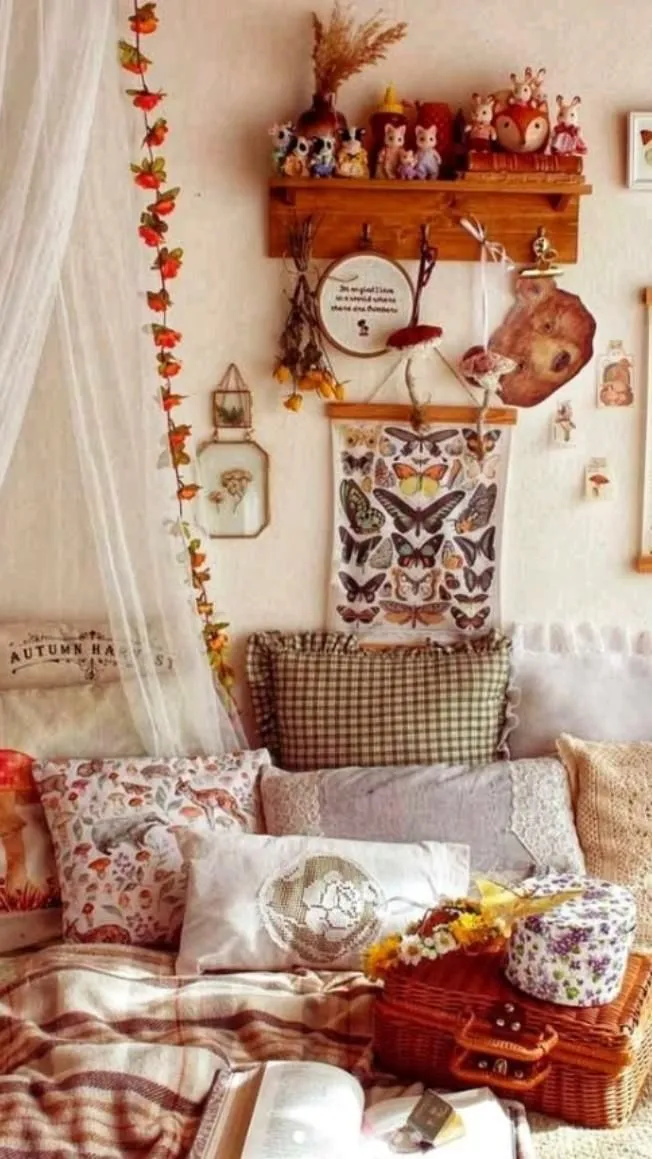
Photo: crowded trendy aesthetic Instagram flat lay cottagecore mushrooms linen, via i.pinimg.com
The Moment You Knew It Was Over
You probably remember exactly when it happened. Maybe it was the day you saw cottagecore mood boards plastered across a Forever 21 display window. Maybe it was when your favorite vaporwave playlist got licensed for a car commercial. Or maybe it was something smaller — a subreddit you'd been lurking since 2014 suddenly flooded with "just found this place" posts from people who clearly hadn't read the sidebar.
Whatever your version of the story, the feeling is remarkably universal: a slow, sinking mix of pride and dread. Your thing made it. And now it's not really your thing anymore.
This phenomenon — let's call it niche collapse — is one of the defining emotional experiences of internet culture in the 2020s. Communities that spent years building something genuinely specific, weird, and theirs suddenly find themselves overwhelmed by mainstream attention. And the aftermath is almost never simple.
Cottagecore's Instagram Moment
Cottagecore is maybe the clearest case study we've got. For a few years in the mid-to-late 2010s, it was a genuinely tight-knit aesthetic community — people into foraging, linen dresses, sourdough starters, and a very particular romanticized vision of rural simplicity. The Tumblr roots were real. The Pinterest boards were deeply personal. It felt like a community built around a shared sensibility, not just a look.
Then 2020 happened. Lockdowns sent the entire internet searching for comfort aesthetics, and cottagecore exploded on Instagram and TikTok with a speed that nobody inside the community was prepared for. Suddenly, fast fashion brands were selling "cottagecore collections." Influencers who'd never touched a mushroom foraging guide were posting cottage-adjacent content for brand deals. The hashtag ballooned from a few thousand posts to millions in under a year.
Ask anyone who was deep in cottagecore before the boom, and you'll hear the same thing: it stopped feeling like a community and started feeling like a trend. The nuance — the specific references, the shared language, the inside knowledge — got flattened into a visual aesthetic that anyone could slap on a product.
That's the thing about niche collapse. It doesn't destroy the aesthetic. It hollows it out.
Vaporwave's Long, Slow Sellout
Vaporwave had a slightly different trajectory, but the ending rhymes. Born in the early 2010s as an ironic, deeply internet-native genre built on warped mall music, Japanese text, and a genuinely strange commentary on consumer culture, vaporwave was never supposed to be mainstream. Its whole DNA was about subverting the commercial.
And then it became... commercial. By the late 2010s, vaporwave aesthetics were everywhere — on phone cases, in YouTube lo-fi streams with millions of subscribers, in clothing drops and graphic design tutorials. The irony collapsed under its own weight. A genre that was literally critiquing capitalism became a capitalism-approved aesthetic.
The original vaporwave community didn't disappear. But it fractured. Some people leaned in, finding new subgenres and weirder corners to explore. Others just quietly moved on, the way you leave a party once it gets too crowded to actually talk to anyone.
What Actually Gets Lost
It's worth being honest here: the instinct to mourn a niche going mainstream can tip into gatekeeping pretty fast, and that's worth interrogating. More people discovering something they love is genuinely good. Accessibility matters. Not every community should stay small.
But there's a real loss that happens beyond just "the vibe changed." When a niche community scales rapidly, a few specific things tend to disappear:
Institutional knowledge. Small communities develop shared references, inside jokes, and unwritten rules over years. New members en masse don't have time to absorb that context, and the community either has to slow down to explain itself constantly or watch the culture dilute in real time.
Trust. Tight-knit communities often run on informal trust networks — you know who the knowledgeable people are, who gives good advice, whose taste you trust. Scale breaks that. You can't personally vouch for everyone in a community of 500,000.
Weirdness tolerance. This one's underrated. Small niches can afford to be genuinely strange because they're not performing for a broad audience. Once the mainstream audience arrives, there's pressure — social and sometimes commercial — to sand down the edges.
Can Communities Survive Their Own Success?
Some do, actually. The key seems to be whether the community has strong enough infrastructure — moderators, traditions, shared vocabulary, a clear sense of purpose — to absorb the influx without losing its core.
The mechanical keyboard hobby is a decent example of a community that scaled without completely losing itself. It got popular enough to spawn mainstream Reddit threads and YouTube channels, but the deeper end of the hobby — custom builds, group buys, obscure switches — stayed genuinely niche within the larger conversation. The community bifurcated rather than collapsed.
Others survive by going deeper rather than broader. When the surface layer of a niche gets colonized by mainstream attention, the original members often retreat to more specific sub-niches. The vaporwave heads who stuck around moved into mallsoft, hypnagogic pop, and increasingly obscure microgenres that the trend-chasers never bothered to find.
There's something almost evolutionary about it. The niche mutates to stay niche.
The Bittersweet Bottom Line
Here's the honest truth: if you built something worth loving, it was probably always going to get found eventually. The internet is very good at surfacing things that deserve attention, and very bad at keeping them contained.
The grief is real. The loss is real. But so is the fact that somewhere, right now, a teenager is discovering cottagecore for the first time and feeling genuinely seen by it — not because it's trendy, but because the core of what made it resonate is still in there somewhere, even under all the fast fashion and brand deals.
And the people who built that thing? They've probably already found the next weird corner to call home. That's kind of the whole deal with niche culture. The craft doesn't stop just because the crowd showed up.