Name That Vibe: Inside TikTok's Hyperspecific Aesthetic Underworld
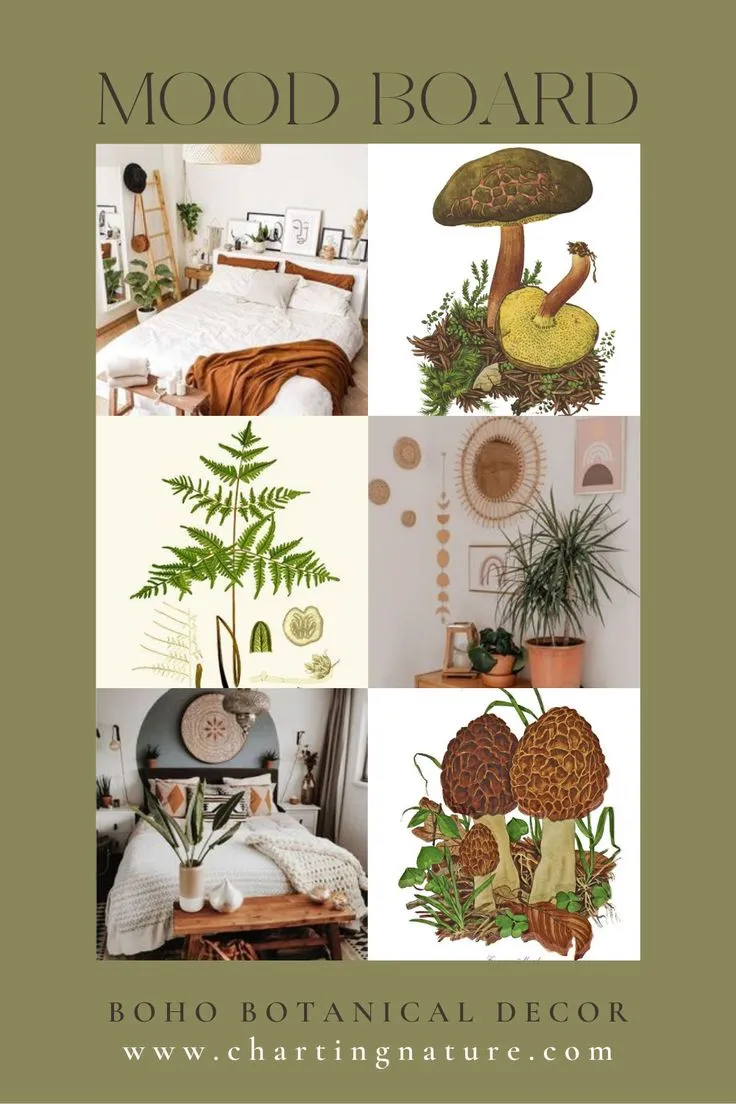
Photo: aesthetic mood board with mushrooms dried flowers vintage objects cottagecore flat lay, via i.pinimg.com
If you've spent any real time on TikTok in the last three years, you've probably stumbled into a corner of the app that felt weirdly, specifically you — and then discovered it had a name you'd never heard before. Maybe it was the mossy, mushroom-heavy world of goblincore. Maybe it was the candlelit libraries and leather-bound notebooks of dark academia. Maybe it was something even more obscure, a micro-aesthetic so specific it felt like someone had been reading your vision board.
This is not an accident. TikTok's algorithm is extraordinarily good at surfacing niche visual content, but the aesthetics themselves — the naming, the codifying, the community-building around them — that's all user-generated. Gen Z didn't just inherit internet culture; they reorganized it around vibes, and then gave those vibes extremely specific names.
What Even Is an Aesthetic?
Before we go further, it's worth being clear about what we're actually talking about. In this context, an aesthetic isn't just a visual style — it's closer to a full-blown subculture with its own values, references, fashion sensibilities, and community norms. Cottagecore isn't just "pictures of flowers and bread." It's a coherent worldview organized around rural simplicity, handcraft, and a romantic rejection of hustle culture. Goblincore isn't just "dark and earthy" — it's a reclamation of things considered ugly or overlooked (mushrooms, rocks, bugs, fog) as genuinely beautiful.
The naming is part of the power. Giving a feeling a name makes it searchable, sharable, and community-forming. Once you can type "dark academia aesthetic" into TikTok's search bar and find thousands of videos made by people who feel exactly what you feel, you're no longer a weirdo with a strange taste in lighting — you're part of a scene.
The Aesthetics Worth Knowing
The landscape here is genuinely vast, and new micro-aesthetics emerge constantly. But a few have developed enough depth and longevity to be worth understanding on their own terms.
Goblincore is probably the most interesting case study. It emerged around 2019-2020, largely on Tumblr before migrating to TikTok, and centers on a love of the overlooked natural world — fungi, river stones, tangled roots, foggy mornings. The aesthetic has a strong anti-glamour streak; it's explicitly about finding beauty in things mainstream culture dismisses as gross or mundane. There's also a pronounced neurodivergent and queer presence in goblincore communities, and the aesthetic has become something of a soft identity marker for people who've always felt a little outside the conventional beauty script.
Cottagecore maximalism is a fascinating evolution of standard cottagecore. Where original cottagecore tends toward clean, soft minimalism — white linen, single wildflowers, quiet kitchens — cottagecore maximalism cranks everything up. Think every surface covered in plants, mismatched vintage china stacked to the ceiling, dried herbs hanging from every beam. It's cozy chaos with a botanical theme, and it has a devoted TikTok following who treat their apartments as ongoing art projects.
Weirdcore and dreamcore operate in more unsettling territory, drawing on surrealist imagery, uncanny spaces, and the specific visual language of early internet aesthetics. These communities often blur the line between aesthetic appreciation and something closer to psychological exploration — there's a lot of conversation in weirdcore spaces about liminal spaces, nostalgia, and the strange emotional texture of half-remembered dreams.
Building Identity Through Niche Visuals
What's actually happening here, sociologically, is pretty fascinating. Traditional identity formation — the kind that happened through geographic community, religious affiliation, or shared physical space — has been fragmenting for decades. Gen Z, who came of age entirely inside that fragmentation, developed a different toolkit. They build identity through aesthetic alignment.
This isn't shallow. When someone says they're goblincore, they're communicating a whole cluster of values: a preference for the overlooked, a certain anti-mainstream stance, probably a love of the outdoors that doesn't involve performance athleticism, likely some skepticism toward conventional beauty standards. The aesthetic functions as a kind of shorthand for a worldview.
Creators who've built followings in these spaces understand this intuitively. Jess, a 24-year-old in Portland who runs a cottagecore maximalism account with around 340,000 TikTok followers, describes her content as "basically just showing people that it's okay to live inside your obsessions." Her apartment — which she has filled, over three years, with plants, vintage ceramics, embroidered textiles, and an alarming number of dried flower arrangements — is the content. "People aren't following me for tips," she says. "They're following me because the space makes them feel something."
That emotional resonance is the whole game. These aren't tutorial channels or shopping guides. They're mood spaces — places where people go to feel a specific feeling and be around others who feel it too.
The Algorithm as Aesthetic Engine
TikTok's role in all of this is complicated. On one hand, the platform's recommendation engine is genuinely exceptional at finding and amplifying niche content — it's part of why these micro-aesthetics have grown so quickly. On the other hand, there's a real tension between the organic, community-driven nature of these subcultures and the flattening effect that comes with mainstream visibility.
Goblincore getting a New York Times trend piece is, for the people who've been in goblincore spaces since 2019, a mixed blessing at best. The aesthetic gets exposure; it also gets cosplayed by fast fashion brands and loses some of its specificity. This is the cycle that almost every niche aesthetic eventually faces — discovery, adoption, dilution.
The response, usually, is to go more niche. When cottagecore went mainstream, the people who actually lived it pushed toward cottagecore maximalism, or dark cottagecore, or fairy-tale cottage — sub-aesthetics that required more commitment and were harder to casually adopt. This is the constant movement at the heart of these communities: always finding a more specific name for the exact feeling, always staying one step ahead of the trend cycle.
It's a very internet way to maintain authenticity. And honestly? It's working.