Priced Out of the Passion: When Niche Hobbies Become Members-Only Clubs
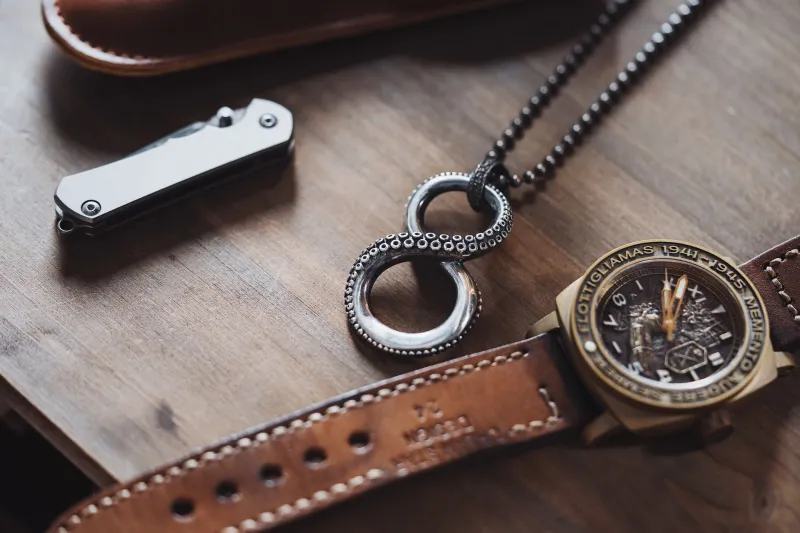
There's a certain romance to niche hobbies. The idea that somewhere out there, a small tribe of people is obsessively devoted to something most of the world ignores — hand-rolled film photography, vintage mechanical keyboards, artisan hot sauces, obscure wargaming miniatures — feels genuinely democratic. Like passion is the only currency that matters.
Except it's not. And increasingly, it never really was.
Across dozens of niche communities right now, a slow and mostly unspoken stratification is happening. The cost of getting in — not just financially, but socially and informationally — has crept up to a point where calling these hobbies "accessible" requires some serious creative math. What used to be the domain of curious outsiders with more time than money is quietly becoming a luxury product dressed up in the language of authenticity.
Call it the niche tax.
What the Niche Tax Actually Looks Like
It doesn't announce itself. Nobody posts a sign that says "you must earn this much to ride." Instead, it works through accumulation.
Take the mechanical keyboard hobby. A decade ago, you could reasonably get into it with a $50 board and some cheap switches. Today, the community's most respected builds regularly clear $300, $500, even $800 — before you've bought keycaps. Group buy culture, which is basically the hobby's primary distribution model, requires you to pay upfront for a product that might arrive 18 months later. The knowledge barrier alone — understanding PCBs, switch actuation weights, gasket mounting, lubing technique — takes months to climb. And if you show up asking basic questions in the wrong Reddit thread, you'll feel the chill immediately.
Or look at the world of high-end audio. Audiophile communities have always skewed expensive, but the floor keeps rising. Entry-level gear that would've earned respect five years ago now gets dismissed as "mid-fi" — a term that functions less as a technical descriptor and more as a social signal. The message, subtle but consistent: if you're not spending at a certain level, your opinion about the sound doesn't fully count.
This pattern repeats across hobbies you might not expect. Specialty coffee. Analog synthesizers. Wet shaving. Fly fishing. Fountain pens. Birding, believe it or not, where serious optics can run thousands of dollars. Each of these communities has a welcoming surface layer and a much more expensive interior.
The Knowledge Gate Is Real Too
Money is only part of it. The other half is information — specifically, who holds it and how freely they share it.
Niche communities develop dense vocabularies fast. Jargon isn't just shorthand; it's a loyalty test. If you don't know what a "holy pandas" switch is, or what "grail watch" means in collector circles, or the difference between a wet and dry fly in fly fishing, you're immediately positioned as an outsider. Some communities are genuinely welcoming to newbies who ask. Others... less so.
There's a particular flavor of gatekeeping that shows up in hobby forums and Discord servers where established members treat basic questions as intellectual offenses. The subtext is clear: you should have done your research before you got here. Which sounds reasonable until you realize "the research" is itself scattered across paywalled reviews, expensive magazines, and years of archived threads that are nearly impossible to navigate without a guide.
The information asymmetry benefits people who got in early and punishes people who arrive late. Which, in practice, often means it benefits people who had the time and resources to get in early.
Is Exclusivity the Point?
Here's the uncomfortable question: for some communities, the pricing out of newcomers isn't a bug. It's a feature.
There's a real psychological pull to belonging to something that not everyone can access. Part of what makes a niche feel meaningful is its resistance to mass adoption. When the barrier is price, it creates a kind of automatic curation — the community stays small, the signal-to-noise ratio stays high, and members can feel like they've earned their place.
Some hobbyists will tell you this openly, if you catch them in an honest moment. They like that their thing is hard to get into. They like that it filters out people who aren't "serious." And they've quietly decided that "serious" correlates with how much someone is willing to spend.
This is where niche identity gets tangled up with class in ways that don't get talked about enough. In the US especially, where we're culturally allergic to acknowledging economic stratification, hobby communities often frame what is essentially a wealth filter as a meritocracy of dedication. "If you really wanted it, you'd save up." "I started with cheap gear too." The bootstrap logic of mainstream American culture, applied to artisan coffee grinders.
What Gets Lost When the Floor Rises
The thing is, niche communities have historically punched above their weight culturally because they were accessible to weirdos from all economic backgrounds. Punk came from broke kids. Early internet fandoms were built by teenagers with dial-up. The zine world ran on photocopiers and borrowed time.
When the cost of entry rises, the demographic narrows. And when the demographic narrows, the ideas narrow too. You end up with communities that are technically niche — small, specialized, devoted — but that are drawing from the same narrow slice of the population. Which is its own kind of monoculture, just wrapped in the aesthetic of counterculture.
You also lose the people who would have become the community's most interesting voices. The kid who can't afford a $400 camera but has an eye for photography. The aspiring audiophile who's making do with mid-range gear but has genuinely interesting things to say about sound. These people get the message — sometimes explicitly, sometimes through a thousand small signals — that they're not quite the target audience here.
The Counterweight
It's not all bleak. Some niche communities actively resist this drift. There are mechanical keyboard builders who maintain budget recommendation lists and enforce welcoming norms around newcomer questions. Specialty coffee corners of the internet that celebrate $20 hand grinders with the same energy as $500 ones. Birding groups that run loaner optics programs so cost doesn't determine who gets to participate.
These communities tend to understand something important: the thing that made their hobby interesting in the first place was the diversity of people who cared about it. Protect that, and you protect the culture.
But they're swimming against a current. As niche hobbies get more visibility — through YouTube rabbit holes, TikTok aesthetics, mainstream press coverage — they attract investment, premium product lines, and an audience that's been told these hobbies are aspirational. The economics follow the attention.
So What Does 'Niche' Even Mean Now?
In 2024, niche doesn't automatically mean scrappy or underground or egalitarian. It can mean small and expensive and deliberately hard to enter. It can mean a community that's proud of its barriers.
That's not inherently wrong. People are allowed to build communities around shared standards, including financial ones. But it's worth being honest about what's happening — and about who gets to be a passionate weirdo in the first place.
Because if the niche tax keeps rising, the answer to that question is going to get a lot narrower. And the internet will be a little less interesting for it.